
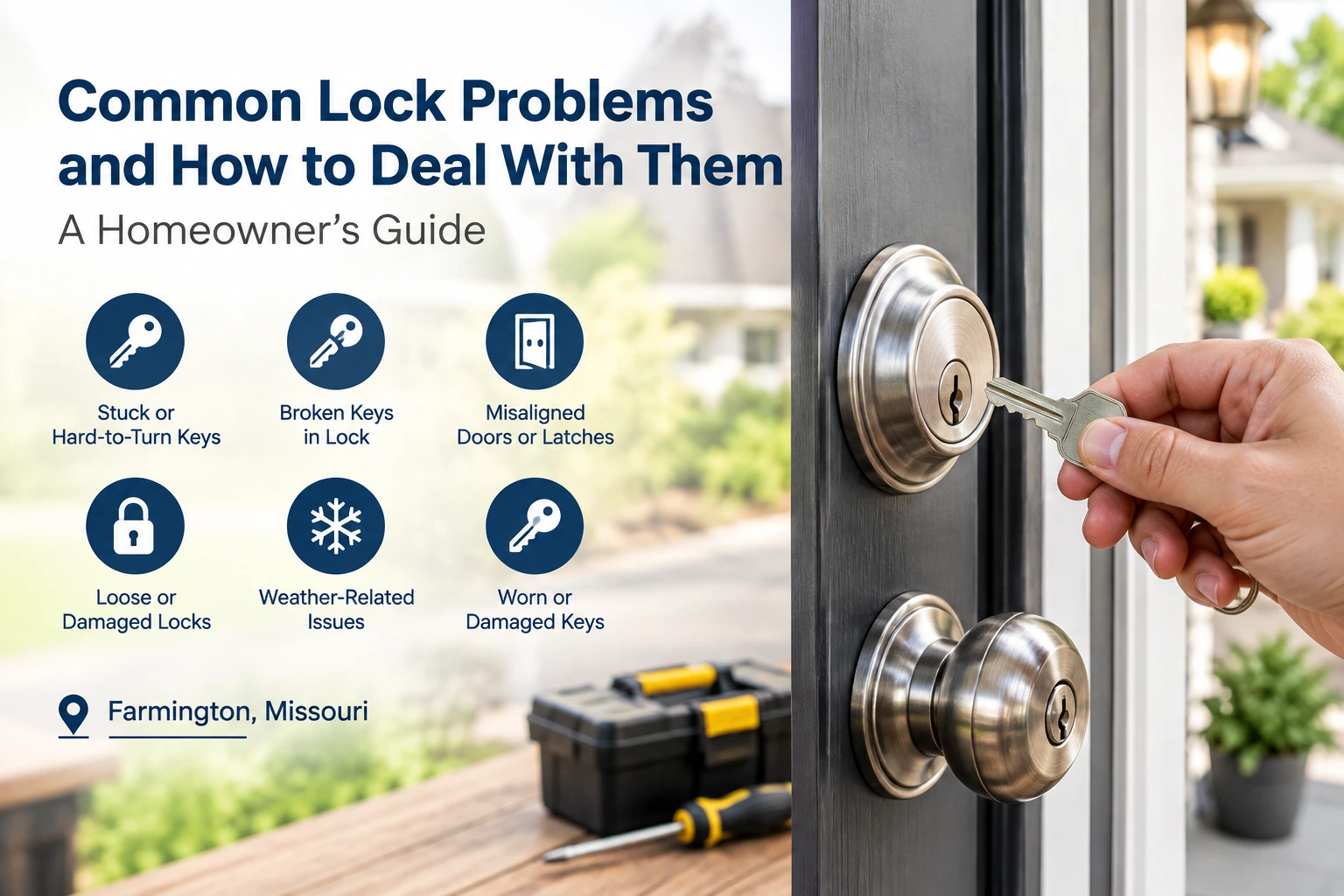
Locks are an important part of home security, but like any mechanical component, they can develop problems over time. A key may stop turning smoothly, a lock can become stiff, or a key may break inside the cylinder. Knowing what causes common lock problems and understanding the appropriate response can help homeowners avoid unnecessary damage and improve everyday security.
For homeowners in Farmington, Missouri, regular attention to doors, keys, and locking hardware can also help identify small issues before they become urgent problems.
1. Key Is Difficult to Turn
A key that suddenly becomes difficult to turn can indicate several issues. The lock cylinder may be dirty, worn, misaligned, or affected by a problem with the door itself. Sometimes, pressure on the door can make the locking mechanism harder to operate.
Before forcing the key, check whether the door is properly aligned with its frame. Avoid excessive force because a key can bend or break inside the lock. If the problem continues, professional inspection may help identify whether the lock needs cleaning, adjustment, repair, or replacement.
2. Key Gets Stuck in the Lock
A key that does not come out easily can be frustrating. This may happen because of a worn key, damaged cylinder, internal debris, or incorrect alignment between the door and frame.
Try to keep the key in its normal position and avoid twisting it aggressively. Pulling too hard can damage the key or the lock. If the key remains stuck, professional assistance is generally safer than using tools that could damage the cylinder.
3. Broken Key Inside the Lock
Keys can break when they become weakened, bent, or repeatedly used in a stiff lock. Attempting to remove a broken piece with household tools can push the fragment deeper into the cylinder.
If part of the key is visible, avoid inserting another object into the lock. A locksmith may use specialised extraction tools to remove the broken piece while reducing the risk of additional damage. After extraction, the lock and key should be checked to determine why the break occurred.
4. Lock Does Not Latch Properly
Sometimes the lock itself is working, but the door does not close or latch correctly. This can happen when hinges shift, the door frame moves, or the latch and strike plate become misaligned.
Check whether the door sits evenly within its frame. Loose screws or visible hardware movement may indicate an alignment issue. If adjusting basic hardware does not solve the problem, a professional can inspect the door and locking mechanism together.
5. Lock Feels Loose
A loose lock can reduce convenience and may eventually affect security. The issue could be caused by loose mounting screws, worn hardware, or repeated use.
Homeowners can inspect visible screws and hardware, but they should avoid overtightening components because this can sometimes affect the mechanism. If the lock continues moving after basic tightening, it may require repair or replacement.
6. Frozen or Weather-Affected Locks
Cold weather can create problems for exterior locks, particularly when moisture enters the mechanism and freezes. Farmington experiences seasonal temperature changes, so exterior door hardware may occasionally be exposed to challenging conditions.
Do not use excessive heat or force on a frozen lock. A suitable lock de-icing product may help in some situations, while regular maintenance can reduce moisture-related problems. If freezing happens repeatedly, inspecting the lock and surrounding door hardware may be worthwhile.
7. Worn or Damaged Keys
Keys gradually wear down through repeated use. A worn key may still operate a lock but can become increasingly difficult to insert or turn.
Keeping a damaged key as the only copy can create problems later. If a key shows visible bending, cracks, or significant wear, consider replacing it before it breaks. If new copies consistently fail to work smoothly, the lock itself may also need inspection.
When Should You Replace a Lock?
Not every lock problem requires complete replacement. Cleaning, adjustment, repair, or rekeying may resolve certain issues. However, replacement may be appropriate when a lock is severely damaged, repeatedly fails, or no longer provides the level of security required.
Homeowners should also consider replacing or rekeying locks after moving into a new property, losing important keys, or experiencing an unwanted access concern.
When Professional Help May Be Needed
If basic troubleshooting does not solve the issue, professional assistance can help prevent further damage. For residents searching for a locksmith in farmington missouri, it is useful to explain the exact problem before requesting service. Information about the door type, lock type, and symptoms can help determine what may be required.
For emergencies such as a broken key, failed lock, or accidental lockout, forcing the mechanism can turn a minor issue into a more expensive repair.
Final Thoughts
Common lock problems often begin with small warning signs such as stiffness, unusual sounds, loose hardware, or difficulty turning a key. Paying attention to these signs can help homeowners address problems before they become emergencies.
Whether the issue involves a damaged key, misaligned door, worn cylinder, or weather-related problem, understanding the likely cause is the first step. When a problem cannot be safely resolved, contacting a qualified professional can help protect both the lock and the property.